The Epstein Transparency Act was passed Nov.19

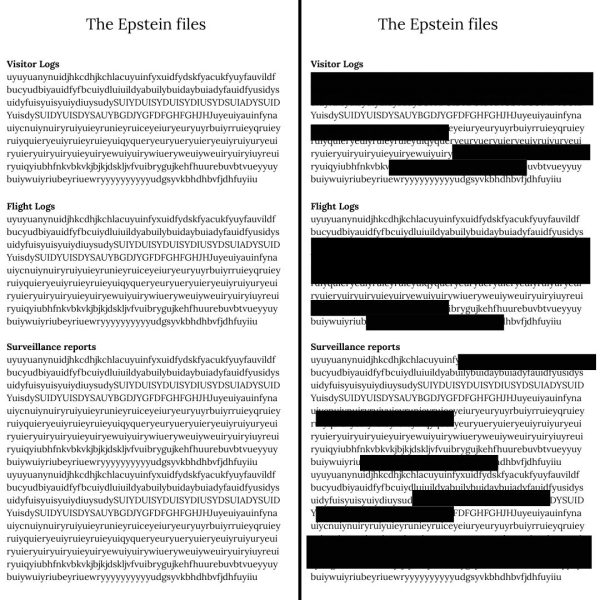
On Nov.19, president Donald J. Trump signed the Epstein Transparency Act, officially turning the bill into a law. The legislation came in response to years of unanswered questions after Jeffery Epstein’s death. The Epstein files are a collection of documents that include court documents, visitor logs, surveillance reports, medical evaluations, incident log and internal memos from the Metropolitan Correctional Center. These records were sealed, heavily redacted or never released. These files have the unanswered questions left by Epstein.
This bill was first thought of for the result to make key information from the Epstein files available to the public. It is known as 4405 and was introduced to the House on July 15. Congress.gov explained that the bill mandates clear documentation practices and faster sharing of incident reports with independent investigators and stronger rules about maintaining video footage spatially during major instances or emergencies. Facilities must also log staffing shortages, equipment failures and procedural deviations more transparently.
Annabelle Oberle ‘26 said, “I believe that it’s good that the files are coming into light as the victims deserve justice.”
When the bill was voted on in the House of Representatives it was a 434 to one vote. It then went to theSenate where it was unanimously voted in favor. Stated on his website Merkley.gov, Oregon’s senator Jeff Merkley said, “Jeffrey Epstein’s victims and the American people deserve the truth about Epstein and his horrific crimes. As long as Congressional Republicans continue to side with the rich and the powerful over justice, I’ll fight to pass my bill to shine a light on the truth surrounding Jeffrey Epstein and those connected to him.”
On the other hand, the one representative who voted against the bill, also stated on his own website Clay Higgins.gov, Clay Higgins, said, “If enacted in its current form, this type of broad reveal of criminal investigative files, released to a rabid media, will absolutely result in innocent people being hurt.”
Hudson Ham ‘26 said, “When the files do get released I think there will be big black boxes all throughout to hide a lot of people[‘s] identities and that’s why they are getting released all of the sudden.”
The act sets national standards for how detention centers must store, organize and release reports. This includes protections against the deletion of footage requirements to release certain high profiles after investigations conclude and oversight to ensure documentation is completed and accurate. Implementation of the bill will begin over the next year. Facilities must update their reporting and record keeping systems and an independent oversight office will publish annual reports and evaluate compliance. These reports will summarize what types of records were released or withheld and why.