The oil industry shifts its landscape through geopolitical actions
After the arrest of the Venezuelan president Nicolás Maduro Moros, the U.S. government seized Venezuelan oil production and sites for refinery and energy services. The White House has publicly declared its intent to control Venezuelan oil sales as indefinite. Tens of millions of barrels of crude oil is planned to go into refining under the U.S. label. As of Jan.13, Venezuela has reopened wells and resumed exports under the Trump administration.
Crude oil in the U.S. is different from crude oil inside of Venezuela.The U.S. crude is classified as “shale oil.” Shale oil is light from lower sulfur content and is generally easier to refine. Venezuela’s oil is extremely heavy and full of sulfur. Due to this it costs more to process and along with being more difficult to refine. This heavier oil often has to be diluted to be usable. During the 1950’s the U.S. began importing oil from countries such as Canada, Mexico and Venezuela. These three countries mostly produce heavy crude oil. Because of this America started designing oil refineries based around heavy crude. Machines such as Cokers, Hydrocrackers and Desulfurization units are implemented to ensure the heavy oil is processed cleanly and efficiently. From 2008 to Feb. 2026, The U.S. entered a shale oil revolution. While this did produce more gasoline and less diesel, our refineries were not designed for this kind of oil, causing extreme inefficiencies.
Now that heavy crude is being brought back into the U.S., refineries and oil companies are optimizing production for this oil. Companies such as Chevron, Vitol and Trafigura are competing for the U.S. license to sell and export Venezuelan oil. Chevron Is the Only U.S. oil major currently operating in Venezuela under special licensing. Chevron executives have been at the White House attending high level operatives talks about expanding actively and upscaling production.
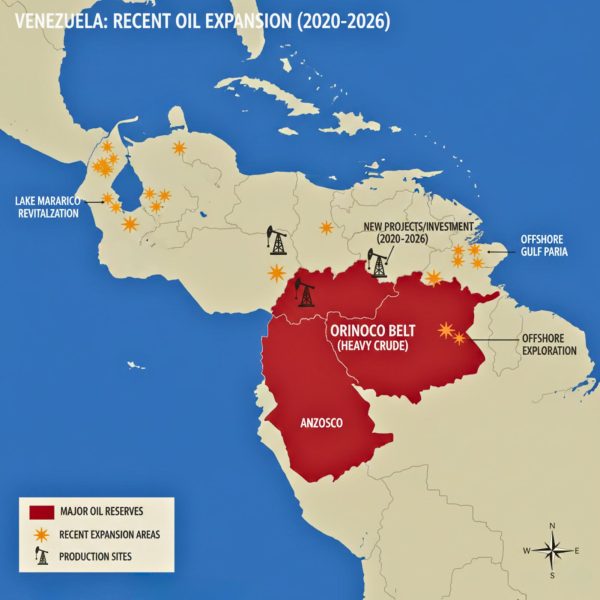
Chevron also owns a refinery specialized in heavy crude refining, importing from themselves would increase productions and profits from the imports and exports. Several other large companies own heavy oil refineries but no other has one and operates in Venezuela.
Caesar Verata ‘26 said, “I think where the government currently stands, they’ll do anything to economize regardless of how the public sees them. In terms of the stock market, it has potential to be very financially beneficial.”
Julio Chauee ‘26 said, “I think it’s a good investment opportunity. I feel it’s good for the future of our economy. Taking control of oil operations will be beneficial.”