VUSD holds the first school closure committee meeting
On March 19 at 5:30 p.m., a school closure committee meeting was held at the Ventura Unified School District office, 255 W. Stanley Avenue in the Christa McAuliffe Room, also known as the overflow room. The meeting followed an agenda that was released 72 hours prior to the meeting as per protocol. The meeting was not livestreamed due to a lack of resources but a summary of every meeting will be provided after the committee approves it which can be found on the committee page of the district website.
Discussions about school closures were first mentioned at the Nov. 6, 2025 board meeting. Prior to the meeting, the district provided a Zoom webinar for families on March 5 regarding the process the committee will go through. The video of the meeting and the presentation slides in English and Spanish are also provided on the committee page.
In early Dec. 2025, the board began announcing the application process through social media posts, newsletters, emails, phone calls, website updates, press releases and more according to director of communications Marieanne Quiroz. 65 applications were received. Committee members and alternates were appointed by the VUSD board at the Jan. 27 board meeting.
VESPA president and committee member Carol Peek said, “I was motivated to be a part of this committee not only to ensure that the ESP (classified employees) voice is heard, but also to make sure it is student-focused. I feel that it is union-related in the fact that if schools close, the employees, whether certificated or ESP, have the potential to lose their positions. The belief is that closing schools will save the district money. I am curious to see how realistic that will be.”
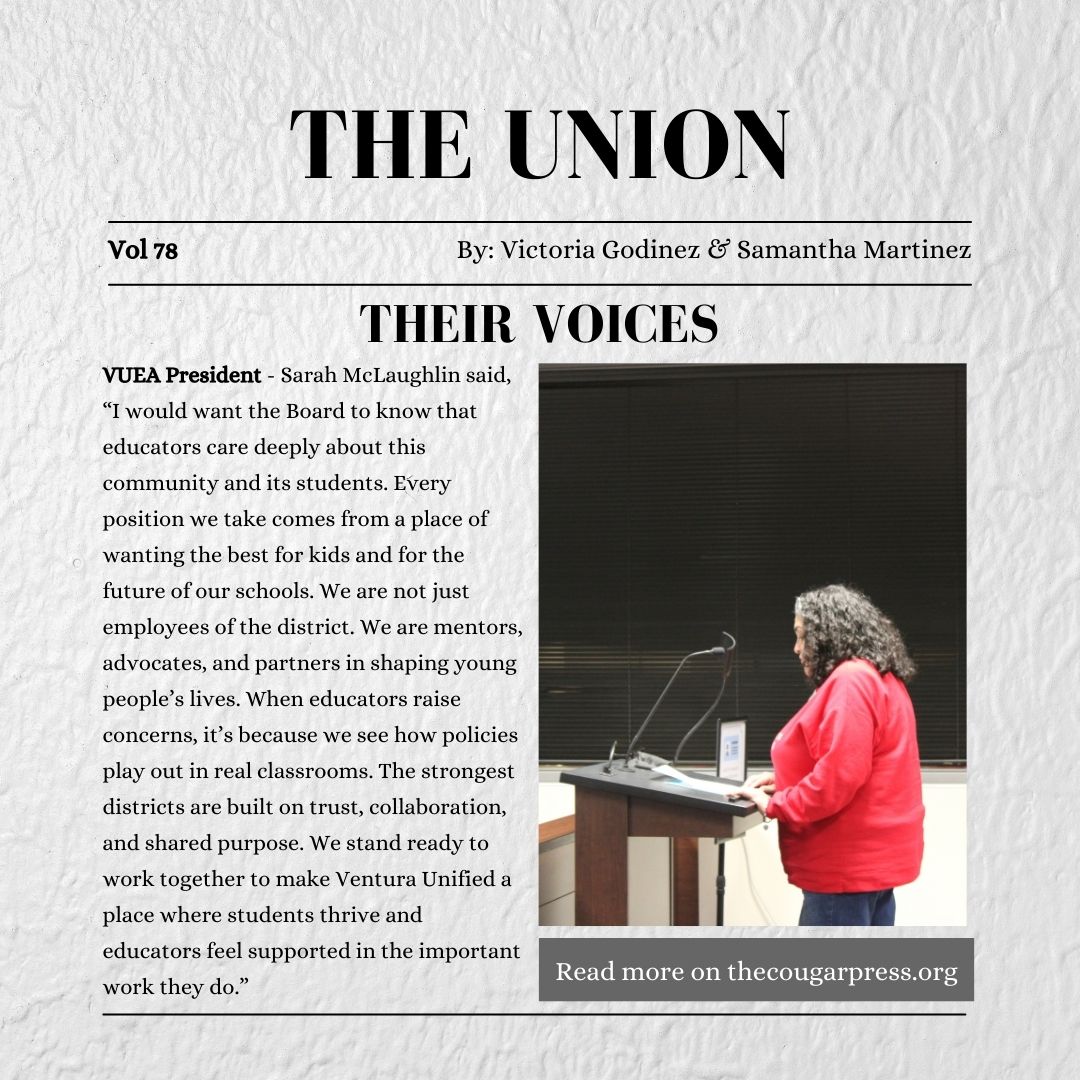
VUEA president and committee member Sarah McLaughlin said, “Personally, I am connecting with other union leaders who have experienced school closures to learn from their experiences…It is my understanding that the discussion of school closures is directly related to the VUSD budget concerns. If there was not a budget deficit, school closures would not likely be discussed. While the objective is to save money, I believe that other consequences from the potential closures need to also be carefully considered.”
The committee page also provides meeting agendas and dates, a document with committee members’ information and resources such as the emails of the board and committee and an FAQ. All school closure meetings are separate from regular board meetings but the topic of school closures could be mentioned in board meeting agendas. The website is managed by Quiroz.
Quiroz said, “Staff has been and continue to research and gather all the data the committee will need to make its decisions. From school usage reports to demographer reports to academic reports, all are gathered and double-checked for accuracy by numerous staff members before being presented to the committee.”
Any action decided by the board regarding school closures would not take place before the 2027-28 school year however, VHS and Buena High School will not be considered for closure but they will still be included in the meeting in the case that they may be of use when other schools close.
Committee member Emmanuel Velasquez ‘27 said, “I decided to join because I have a lot of family members who are going to be in the school district or are in the school district so this will affect me and them.”
Quiroz said, “Given the number of students enrolled at each comprehensive high school and the specialized facilities required, there is no other location within the district that could accommodate either school if one or both were closed.”
At the meeting, committee members were given a packet, a binder and snacks. A call to order began the meeting and then attendance was taken. During roll call, all members were accounted for except Kevin Herrera and Jeanette Park. Board members will not be attending the meetings “to allow committee members the space they need to get the work done,” according to Quiroz. After roll call, meeting members unanimously agreed to adopt the agenda.
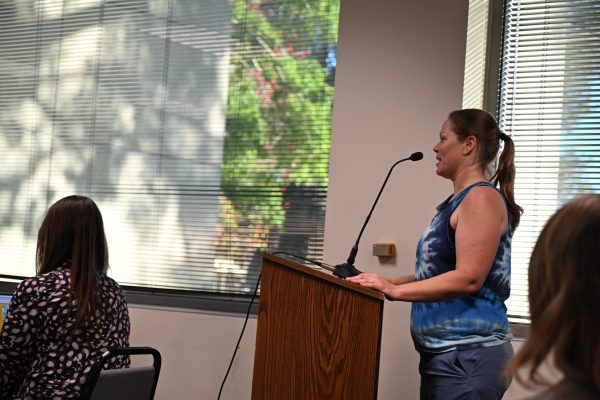
Following the adoption, the agenda moved to public comments. Aside from time during public comments, alternates and the audience were not permitted to speak. Each person was given three minutes to speak and given a 30-second warning before the end of their time. Public comments were required to remain relevant to school closures.
The meeting then moved on from public comments to discuss the code of conduct and expectations of the committee that are provided in the meeting presentation. General counsel Anthony Ramos explained the Brown Act which prohibits the committee from engaging in serial communications. Social media engagement such as likes, comments and shares could also fall under serial communications.
According to the State of California Department of Justice, “The Act expressly prohibits serial meetings that are conducted through direct communications, personal intermediaries or technological devices for the purpose of developing a concurrence as to action to be taken…Typically, a serial meeting is a series of communications, each of which involves less than a quorum of the legislative body, but which taken as a whole involves a majority of the body’s members.”
Assistant superintendent Ahsan Mirza then explained the scoring criteria for school closures. A 10-minute break was instated during this time. Mirza continued to go over the criteria after the break. In total, there are 24 criteria related to demographics and capacity, facilities, education and student support services and fiscal and other impacts that schools will be evaluated under using a point system. Additional factors such as free or reduced-price meals, as well as race and ethnicity will also be taken into account but not scored.
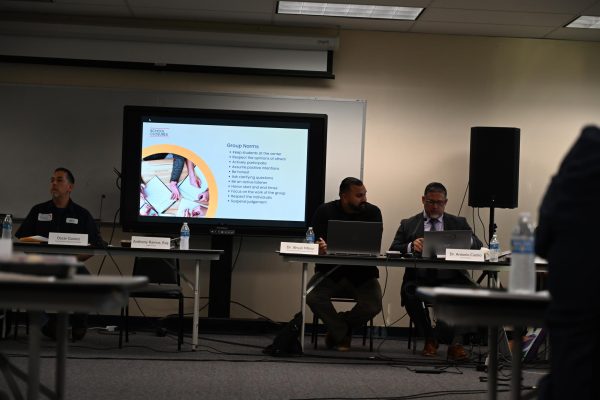
Quiroz said, “School Services of California recommended the scoring criteria, based on best practices from other California districts. The goal is to examine multiple data points on why we might close a school…The scoring criteria are a fixed rubric developed based on best practices across the state.”
Afterwards, the meeting proceeded with the action items. The one action item on the agenda was to select a chair and vice-chair for the committee. Committee members were informed of the responsibilities of these positions. Candidates for chair and vice-chair were either nominated by themselves or others.
Foothill student Sydney Traub ‘29 as well as Peggy Maryanski and Jorge DeLeon were nominated for the chair position. Because there were more than three nominations, there would be one round of voting. The position would then be selected from the top two candidates in the second round. In the first round, Traub received six votes, Maryanski received 10 and DeLeon received four. In the second round of voting, Traub received eight votes and Maryanki received 12, winning the chair position.
Traub was also nominated for vice-chair. No other members were nominated. During the voting process, Traub received a unanimous vote and won the vice-chair position.
After voting, the meeting was voted unanimously to be adjourned.
Any questions and comments for the committee can be sent to [email protected] which will either be answered by staff, chair or vice-chair but will not be considered public comments as they are meant to be made in-person. Press inquiries can be sent to [email protected].