How does implicit bias play a role in our lives?
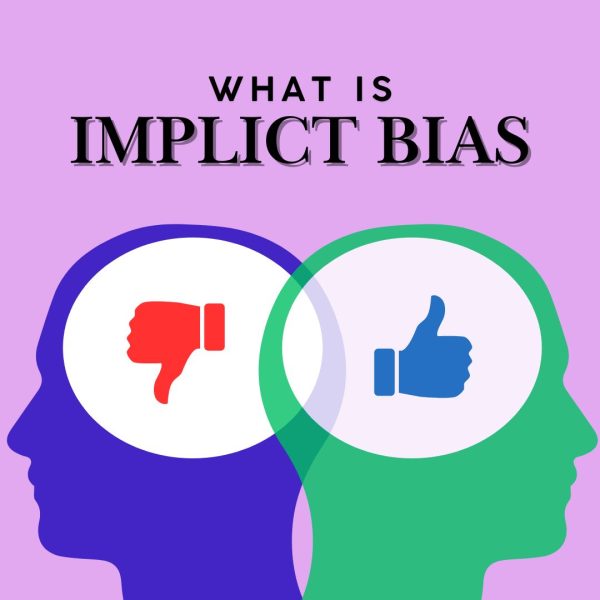
Have you ever caught yourself assuming someone’s gender based on their profession, getting scared when a person of color walks past you on the street, or guessing someone’s sexuality based on the way the act? If so, you have participated in implicit bias in your own life.
Implicit bias is the subconscious unequal treatment of a person stemming from stereotypes or prejudice towards different groups of people, albeit for gender, race, sexuality or class. Humans brains tend to overgeneralize and categorize people into different boxes which causes implicit bias to occur.
For centuries, men and women have had different and varying gender roles but this system has become outdated in modern society where there is more equal opportunity, yet we still see implicit gender bias. An example of this would be in the workplace. For instance, a very common assumption is that most teachers are women or doctors are men, but why is this? A large factor that plays into implicit gender bias is history. In the 19th century education was becoming more and more common which caused a demand for more teachers. Because women were viewed as more docile and caring they were often the ones to take the jobs. Although much time has passed, society has struggled to shake the ideals they had hundreds of years ago. In addition, men are traditionally assumed to be stronger and angrier, which makes women more of a better option compared to men because of their “sweetness.” Rutgers Alternate Route said, “For women denied schooling growing up, these academies were their only access to education and, ultimately, independence.
Colbie West ‘27 said, “I know that [implicit bias] is built from societal views and values. I feel like I definitely have faced it even in subtle ways because I am a woman but it hasn’t been the biggest issue in my life as it may be for other people and I probably have had implicit biases towards other people without even realizing it because it’s such a common thing in our society.”
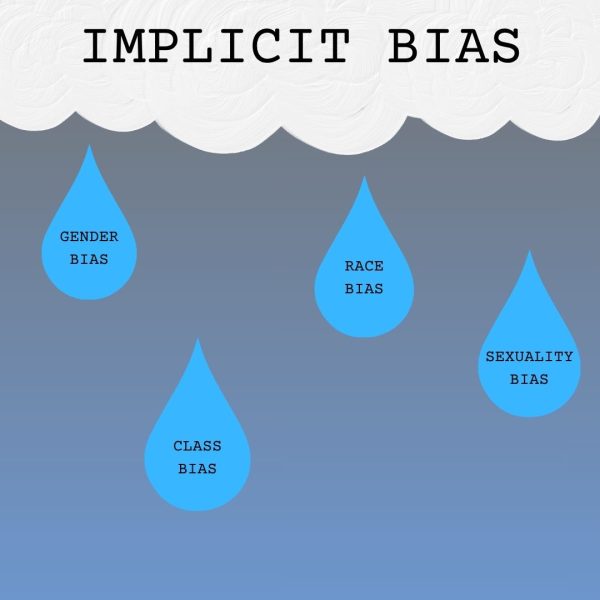
Racial bias is also incredibly prevalent in our societies and day to day life. Once again, lingering effects of outdated systems of segregation and slavery from our history are to blame. When the Americas were being colonized, European settlers would enslave the natives for forced labor but after they began dying off, colonizers began importing and purchasing slaves from Africa. Although a divide of race was already created, it was strongly reinforced by the first official laws that were specified to only apply to “whites.” Although the laws have been abolished, the superiority complex they created are still present in both large and small ways. The Society Pages said that because of this people may be more scared of people of color or assume they are more likely to commit a crime.
Oliver Henn ‘26 said, “Maybe I have faced [implicit bias] since I’m LDS, so many people view my religion as a dangerous cult which I can assure you it’s not. But given our implicit bias I would like to pretend that I haven’t, I’m certain that I have, just because I think it exists in all of us but the more we are able to recognize it the more we are able to stop it.”
These are a few examples of implicit bias but there are many other variants such as bias based on sexuality or class. But there are ways to combat the implicit bias that you may have. One of the first steps you can take is to become aware of the stereotypes you may have and try to put them out of your mind when meeting new people. See every person as an individual and not as a member of a group to further remove the stereotype you may hold. It’s important to consider the other person’s point of view. In general, remember to make sure to be empathetic and kind towards everyone you meet regardless of any stereotypes you may hold on to.





![The second song [called Ca$ino] of the album features Baby Keem repressing the sad moments with his mother which made him mad and embarrassed. Graphic by: Joaquin Romero](https://thecougarpress.org/wp-content/uploads/2026/05/MEDIA-1-COVER-1200x1200.jpg)