Why record federal agents? Should we and if so, how do you do it?
Nearly everyone these days walks around with a phone in their pockets and bags. What people choose to capture with the camera app can vary from selfies with friends to videos of concerts. However, there have been many moments that have been recorded showing injustices perpetrated by authority figures such as law enforcement and most recently Immigration and Customs Enforcement, usually abbreviated to ICE. The deaths of Renee Good and Alex Pretti by ICE in Minneapolis were recorded on eyewitness cell phones. Videos of ICE tackling people, unleashing gas and executing deportation operations have been increasing. The videos of Good and Pretti’s death documented on Jan. 7 and Jan. 24 show physical force perpetrated by ICE agents and have sparked protests, scrutiny and calls for reform. Do these first account cell phone videos recorded by people aid in holding authority figures accountable when injustices are committed? Is it worth it to record ICE agents and law enforcement and if so, how do you do it?
Why record federal law enforcement?
Cell phone videos provide a level of transparency, especially when it is not provided first-hand. Videos are graphic records that demonstrate an agency’s agenda and how they are going about executing their work. More importantly, when misconduct is perpetrated by an agency, video evidence keeps that misconduct from being shielded from the public. Cell phone video can also expose violations of rights and civil liberty which can be brought to the court of law. The camera app keeps things honest and holds a level of accountability.
Eyewitness videos, arguably most important, can be used as evidence in court. Cell phone videos used as evidence can identify who was involved and clearly depict what happened during the incident to judges, jurors, attorneys and the general public. These videos in court also provide a level of honesty regarding the narrative to what happened. This can eliminate misinformation, scapegoating and corruption. Video evidence can aid in serving justice if injustices are committed.
Recording law enforcement brings public awareness to the situation. Mass media such as social media and news organizations can increase national and even global awareness. Education is a powerful way to combat injustice and awareness can prompt people to take action by advocacy, writing to local political leaders and increasing awareness themselves. In addition to an honest and clear narrative in the courtroom, eyewitness videos also bestow a clear and honest narrative to the public, diminishing false information and harmful political discourse. This is a government by the people, for the people, so take action to fight for that.
Should we record federal law enforcement?
The American Civil Liberties Union reports that the right to film law enforcement in a public setting is protected by the first amendment of the Constitution, so you can legally record agents. If you encounter a situation that does not feel or look right, it is your protected right to open your phone and document that situation. There is really no definitive yes or no regarding whether people should record federal law enforcement, it is ultimately the decision of each individual and the given situation.
There are risks involved when it comes to recording federal law enforcement. Retaliation by officers is one and can include physical force such as tear gas or arrest as well as digital retaliation such as threats or doxxing. Legal issues such as civil disobedience is another risk involved with recording, however recording with your cell phone or other items is not inherently disobedience.
How to record federal law enforcement safely
If someone decides to record federal agents, there are ways to lower the risks, ensure your rights and ensure a clear video. First off, to protect yourself, make sure the scene is safe enough for you to stay and capture the situation. Try to maintain a safe but clear distance and while it may be tempting to physically intervene, try to refrain as this will lower your risk of physical retaliation and arrest. Do not resort to physical force or harm because that could escalate the situation dangerously. If they give orders, comply as best you can while not obstructing the video. Keep hands and phone visible so nothing is mistaken for a weapon. If intimidation or deterrence from filming occurs, calmly state that recording is protected by the first amendment. While recording, try to film as long as possible and Wired advises to record horizontally to “include more of the scene.” If arrest, privacy or retaliation is a major concern, an alternative to phone videos are digital cameras. SD cards can be physically removed and do not connect to networks which limits or erases tracking opportunities. Make sure to save copies of the videos to cloud storage or drives for example and do not edit them at all.
It may be a lot of peoples’ actions to post videos to social media or send them to news organizations, but there are some things to think through. One aspect is the safety and privacy of others involved in the video. Consider blurring bystanders’ faces from the video. Repercussions from employers and law enforcement can also occur after sharing the video. While the location of the situation is important, check tracking abilities, especially tracking from social media apps where the video could be posted. Social media’s algorithms filter content, so consider sharing the video to news organizations, civil liberty groups and lawyers.
While filming federal law enforcement can bring social awareness and transparency to the
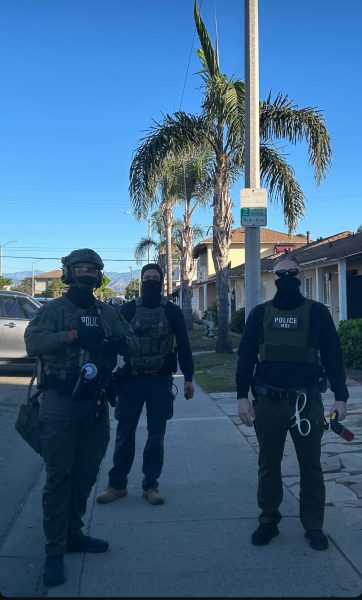
situation, keep in mind the risks of filming federal agents and the steps you can take to lower the risks. Miley Vergara ‘27 recorded an ICE operation executed on Oct. 29, 2025 in Oxnard. Vergara said, “Honestly, I feel like I brought awareness to what was happening in the moment. It’s definitely scary because you never know what they’re actually gonna do.” In regards to retaliation perpetrated by agents to people filming, Vergara said, “I think it’s just unnecessary since it is our right to video [tape]…I felt at risk the whole time.”





![The second song [called Ca$ino] of the album features Baby Keem repressing the sad moments with his mother which made him mad and embarrassed. Graphic by: Joaquin Romero](https://thecougarpress.org/wp-content/uploads/2026/05/MEDIA-1-COVER-1200x1200.jpg)